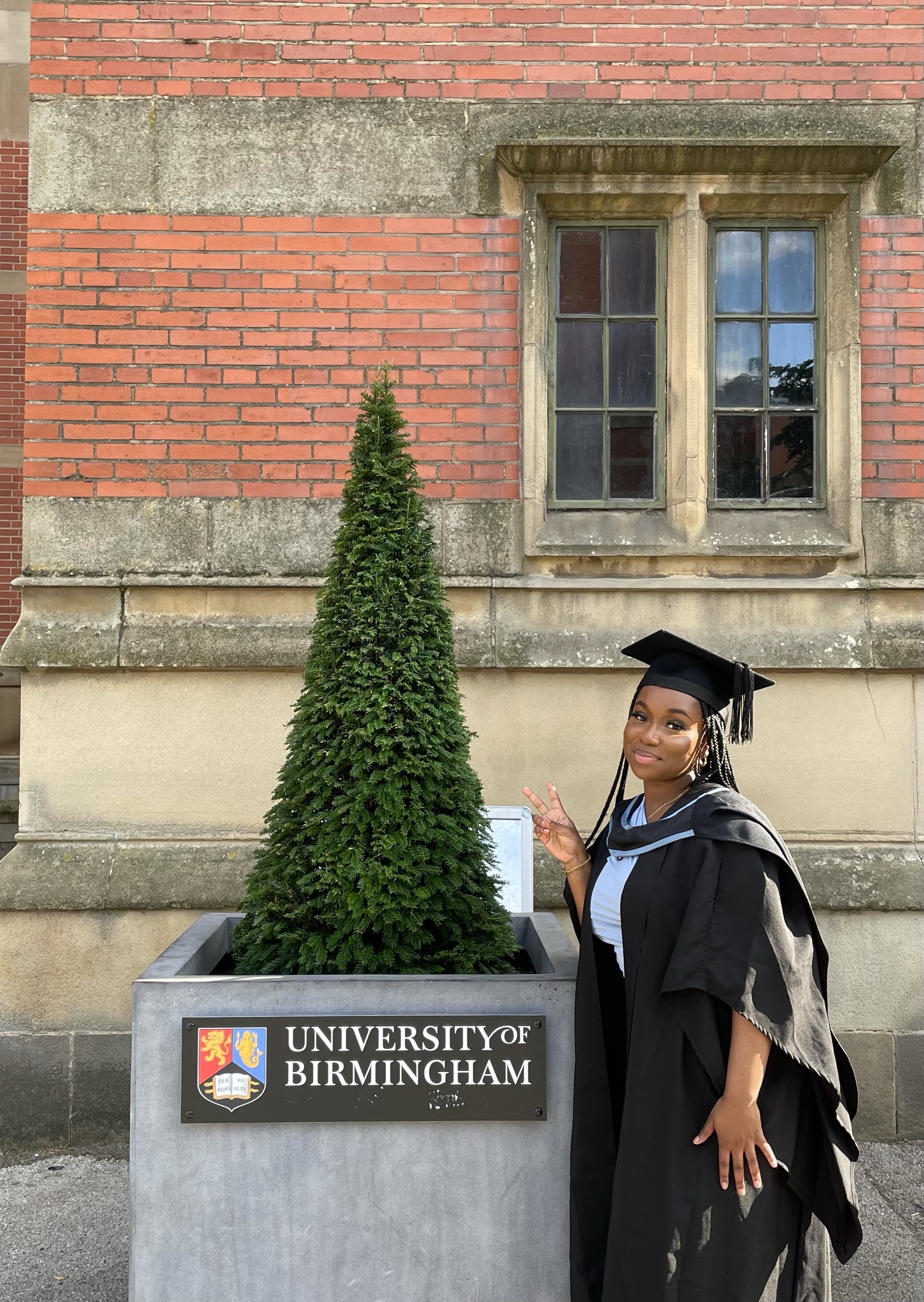
Shania Rankin (University of Birmingham) is the 2022 RACE Dissertation Prize Winner. Congratulations!
Interview by James Esson (QMUL)
JE: How did you come up with your dissertation topic
SR: When discussions around dissertation topics started in my final semester of second year and we were asked to write a dissertation proposal, I instantly knew that I wanted to focus my research on Black women. As a young Black woman who was raised by Black women, my blackness and womanhood have always been extremely important parts of my intersectional identity, and so it felt like the most natural thing to focus on. I am and have always been passionate about all thing’s Black women, and for me it was important to research something that I genuinely cared about. During my time at university, I had also realised that there was an overwhelming lack of research and academic literature on Black women in British Geography and so this was further motivation for me as I would be helping to fill an important research gap.
I then had to figure out what specific issue or phenomenon I would focus on regarding Black women, which felt like the harder part to be honest as I cared about so much! But one thing I knew is that I wanted it to be topical. I remember I had recently watched a documentary on Channel 4 called ‘The Black Maternity Scandal: Dispatches’ and felt incredibly inspired after watching it. The documentary led me to FIVEXMORE, which is a grassroot organisation committed to highlighting and changing Black maternal outcomes in the UK, which in turn then led me to discover many other shocking stories online about Black women’s maternal experiences, including the Black British author, Candiace Braithwaite. I felt like this was too much of a relevant and significant topic not to research and was shocked at the lack of work on it, particularly in the UK.
So, it was decided – I was going to research the Black Maternal Health Crisis in the UK, and to ensure it was a Geography dissertation, I adopted Black feminist geographic thought as well as the theoretical frameworks of embodiment and intersectionality. How Black women’s bodies have historically been perceived and politicised was already an interesting topic to me, and so using embodiment as a theoretical framework, I wanted to further explore how pregnancy and the maternal experience changes how the Black body is perceived and treated and how this may affect outcomes.
Overall, I felt that researching this would be important to Black British Geography and in particular, Black feminist geographic thought.
JE: What were some of the challenges you faced as a researcher?
SR: In terms of challenges, I remember feeling worried about how little research and academic literature there was on Black women, let alone maternal experiences, in British Geography. I found it very hard at the beginning to find relevant academic sources and when I did, the difficulty was establishing the link to my research topic, when often they weren’t explicitly connected to Black maternal experiences at all. Over time, rather than viewing it as a challenge it became an opportunity to create my own unique opinions and links, and made the outcome of the final dissertation that much more satisfying. I also found that finding a representative sample who were willing to share their experiences on what is for some, a very sensitive and traumatic topic, initially quite difficult. However, with the help of my friends, family and dissertation supervisor, I was able to find some lovely women who were more than happy to participate. I also didn’t realise how hard it would be for myself at times to hear and analyse the findings as a Black woman myself. Although I don’t yet have children, it still felt like a topic that was very close to home.
JE: What were some of the highlights of conducting your dissertation?
SR: I really enjoyed the interview process and getting to know my participants and their stories. Not only was it eye-opening and insightful, but we were able to build genuine rapport with one another and meaningful relationships. I would also say that seeing all my hard work come together and finishing the dissertation was a top tier feeling. A lot of late nights and hard work went into it, and I was so happy to see the final outcome. I felt like I did something of significance for Black women that could one day contribute to making some tangible change, and if anything, it will at least bring some well-needed awareness to anyone who reads it. As is said in my dissertation: “This dissertation is therefore for Black women, rather than simply just being about Black women”.
Do you have any tips for undergraduate students planning or doing their dissertations?
SR: My top tip would be to be true to yourself and research something that is genuinely important to you. Writing a dissertation is never easy but choosing a research topic that you are passionate about will make the process much more enjoyable. Also, utilise all support resources available and do not be disheartened by the fact that there may not be much literature on your chosen topic – the fact that there is a research gap will make the dissertation that much better and gives you the chance to get creative with the types of sources you use! And lastly, on a more practical level, be organised and start as early as possible.
JE: Which scholars and activists had an influence on you?
SR: I would say Kimberlé Crenshaw and bell hooks for sure. Also, Patricia Noxolo, who was my tutor and dissertation supervisor, and Patricia Daley, particularly as they are both Black British-Caribbean female geographers. They stood as role models to me as a Black British-Caribbean female geographer myself. There are very little black female geographers generally who are researching the things that they do. It was motivation for me in an academic field which is predominately white and male. I also generally really like the works of Candice Braithwaite!
JE: What are your plans for the future?
SR: My overall goal for the future is to be a changemaker and improve the lives of people around me, making a tangible difference for my people. I am currently on the NGDP graduate scheme working in local government which is an amazing development opportunity and has given me the chance to work towards this goal. It has been really motivating working with other young passionate Black people striving for the same thing, hoping to one day also make systemic change. My dissertation and particularly the women who participated in my research continue to inspire me. I hope to one day specifically work in improving Black maternal outcomes, making change within government and the NHS. Generally, I am really excited for the future and to see where life takes me. I hope to be an example for other young Black women with similar goals and passions.

 Race, Culture and Equality Working Group